
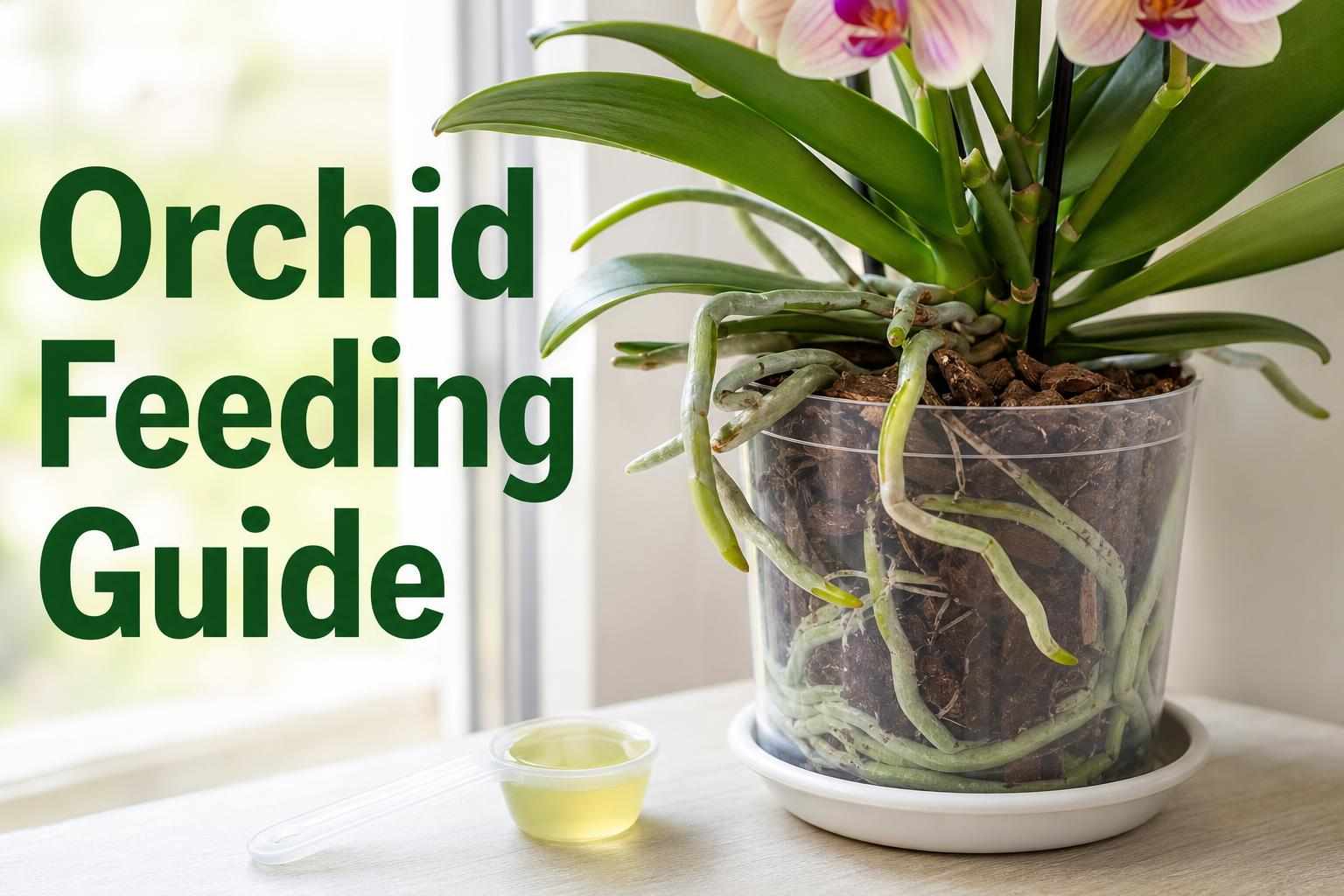
Orchid Fertiliser Guide: Feeding Schedules, Nutrients and Mistakes to Avoid
Orchid fertiliser: why feeding matters
Getting orchid fertiliser right is one of the simplest ways to improve growth, root strength and flowering performance. Orchids do not need heavy feeding, but they do need a steady supply of balanced nutrients during active growth. Too little feeding can leave plants weak and slow to bloom, while too much can scorch roots and create a build-up of salts in the potting mix.
The key is to feed lightly, regularly and according to the plant’s growth cycle. Different orchids have slightly different needs, but the same principles apply: use a suitable fertiliser, dilute it correctly and adjust feeding as light levels, temperature and growth change throughout the year.
What orchids need from fertiliser
Orchid fertiliser is not about pushing rapid growth. It is about supplying the nutrients that support healthy leaves, strong roots and reliable flowering. Most orchids grown at home benefit from a balanced fertiliser containing nitrogen, phosphorus and potassium, along with trace elements such as magnesium, calcium, iron and manganese.
The main nutrients explained
- Nitrogen (N) supports leafy growth and overall vigour.
- Phosphorus (P) helps root development and flower formation.
- Potassium (K) improves plant health, stress tolerance and bloom quality.
- Trace elements help prevent deficiencies and keep metabolism functioning properly.
A common mistake is assuming that more phosphorus always means more flowers. In reality, orchids respond best to a balanced feeding programme rather than a bloom booster used in excess. A well-formulated orchid fertiliser used consistently is usually more effective than occasional strong feeding.
How often to feed orchids
Feeding frequency depends on the orchid type, potting medium and growing conditions. As a general rule, orchids prefer weak fertiliser applied more often rather than strong fertiliser applied occasionally.
General feeding schedule
- During active growth: feed every 1 to 2 weeks with a diluted orchid fertiliser.
- During slower growth or cooler months: reduce feeding to once every 3 to 4 weeks, or pause if the plant is resting.
- After repotting: wait until new root growth appears before resuming regular feeding.
If you are unsure, start conservatively. A half-strength or quarter-strength dilution is often safer than using the label rate, especially for orchids in bark-based mixes, which do not hold nutrients for long.
A simple rule for home growers
For many orchids, the best approach is: water first, feed second. Apply fertiliser to a moist medium rather than to dry roots. This reduces the risk of root damage and improves nutrient uptake. Some growers also follow a “weakly, weekly” method, using a very dilute orchid fertiliser at each watering during active growth.
Choosing the right orchid fertiliser
The best orchid fertiliser is one that is balanced, easy to dilute and suitable for the growing medium you use. Orchids grown in bark usually need more frequent feeding because bark does not retain nutrients for long. Orchids grown in moss or finer mixes may need a lighter hand because these media hold moisture and nutrients for longer.
What to look for on the label
- A balanced N-P-K ratio or an orchid-specific formula.
- Micronutrients and trace elements included.
- Clear dilution instructions for houseplant use.
- A low-salt formula where possible, especially for sensitive orchids.
If your orchid is in a very airy setup and dries quickly, it may benefit from slightly more regular feeding, but always keep the solution weak. In contrast, orchids in wetter mixes generally need less frequent fertiliser application.
Seasonal feeding: matching fertiliser to growth
Orchids do not feed and grow at the same rate all year. Their needs change with the seasons, light levels and flowering cycle. Feeding should support growth, not force it.
Spring and summer
These are usually the main growth months. Leaves, roots and new shoots develop more quickly, so a regular orchid fertiliser schedule is useful. Feed lightly and consistently, and monitor how quickly the potting mix dries out.
Autumn
As days shorten, growth may slow. Reduce feeding gradually if the plant is no longer producing new roots or leaves. Continue feeding only if the orchid is still actively growing.
Winter
Many orchids need less fertiliser in winter because lower light levels reduce growth. Overfeeding at this stage can lead to soft growth that is more vulnerable to disease. If the plant is resting, cut back sharply or stop feeding until growth resumes.
Signs your orchid fertiliser routine is working
A good feeding programme should produce gradual, healthy improvement rather than dramatic change. Look for firm roots, steady leaf growth and better flowering over time. Healthy roots are usually the clearest sign that your fertiliser routine is appropriate.
Positive signs
- Roots remain firm and silvery-green when moist.
- New leaves are strong and evenly coloured.
- Flower spikes develop at the right time for the species.
- The plant recovers well after flowering and enters new growth.
If the orchid looks healthy but is not blooming, the problem may be more about light than fertiliser. Nutrition supports flowers, but it cannot replace the light levels needed to trigger blooming.
Common orchid fertiliser mistakes to avoid
Many orchid problems come from feeding errors rather than from a lack of nutrients. Avoiding these mistakes can make a big difference to root health and blooming success.
1. Using too much fertiliser
High concentrations can burn roots and leave mineral deposits in the potting mix. Orchid roots are sensitive, so stronger is rarely better. Stick to dilute applications and never exceed the recommended dose without a good reason.
2. Feeding dry roots
Fertiliser should usually be applied after watering or with a lightly moist medium. Feeding a dry orchid can increase the risk of root stress. If the plant is very dry, water first and feed later.
3. Ignoring salt build-up
Repeated fertiliser use can leave salts behind, especially in bark mixes and small pots. Flush the pot with plain water periodically to help remove residue. This is particularly important if you feed regularly.
4. Fertilising a stressed plant
If an orchid is suffering from root rot, dehydration, pests or recent repotting stress, hold back on fertiliser until it starts recovering. Feeding a weak plant can make the problem worse.
5. Using the wrong product
General houseplant fertilisers can work, but they are not always ideal for orchids. Some products are too strong or not suited to epiphytic root systems. An orchid fertiliser is usually easier to manage and better matched to the plant’s needs.
How to feed orchids safely
The safest feeding method is simple and repeatable. Keep the fertiliser weak, apply it to a moist medium and stay consistent. That routine helps avoid sudden changes that can stress the plant.
Step-by-step feeding method
- Water the orchid lightly if the mix is dry.
- Dilute the orchid fertiliser according to the plant’s needs, often at reduced strength.
- Apply evenly through the potting medium.
- Allow excess liquid to drain away completely.
- Flush the pot with plain water from time to time to reduce salt build-up.
For most home growers, consistency matters more than a complicated schedule. A sensible routine with a suitable orchid fertiliser will usually outperform irregular heavy feeding.
Do all orchids need the same fertiliser schedule?
No. Orchids vary in growth pattern, flowering season and root behaviour. Phalaenopsis orchids, for example, often respond well to regular light feeding, while other orchids may need more seasonal adjustments. The growing medium also affects how often nutrients must be replaced.
Rather than memorising a rigid formula, observe the plant. If roots are healthy and growth is steady, your current orchid fertiliser routine is likely working. If the orchid looks weak, produces soft leaves or develops crusty residue on the pot, review the strength and frequency of feeding.
Final advice for better blooms and roots
Effective orchid feeding is about balance. Use a good orchid fertiliser, keep the dose low, feed during active growth and avoid common mistakes such as overfeeding or applying fertiliser to dry roots. When the nutrient routine supports rather than stresses the plant, orchids are more likely to produce strong roots, healthy foliage and dependable blooms.
In other words, the best results come from careful, regular care rather than aggressive feeding. Keep it light, keep it consistent and let the orchid tell you how it is responding.



Recent Comments