
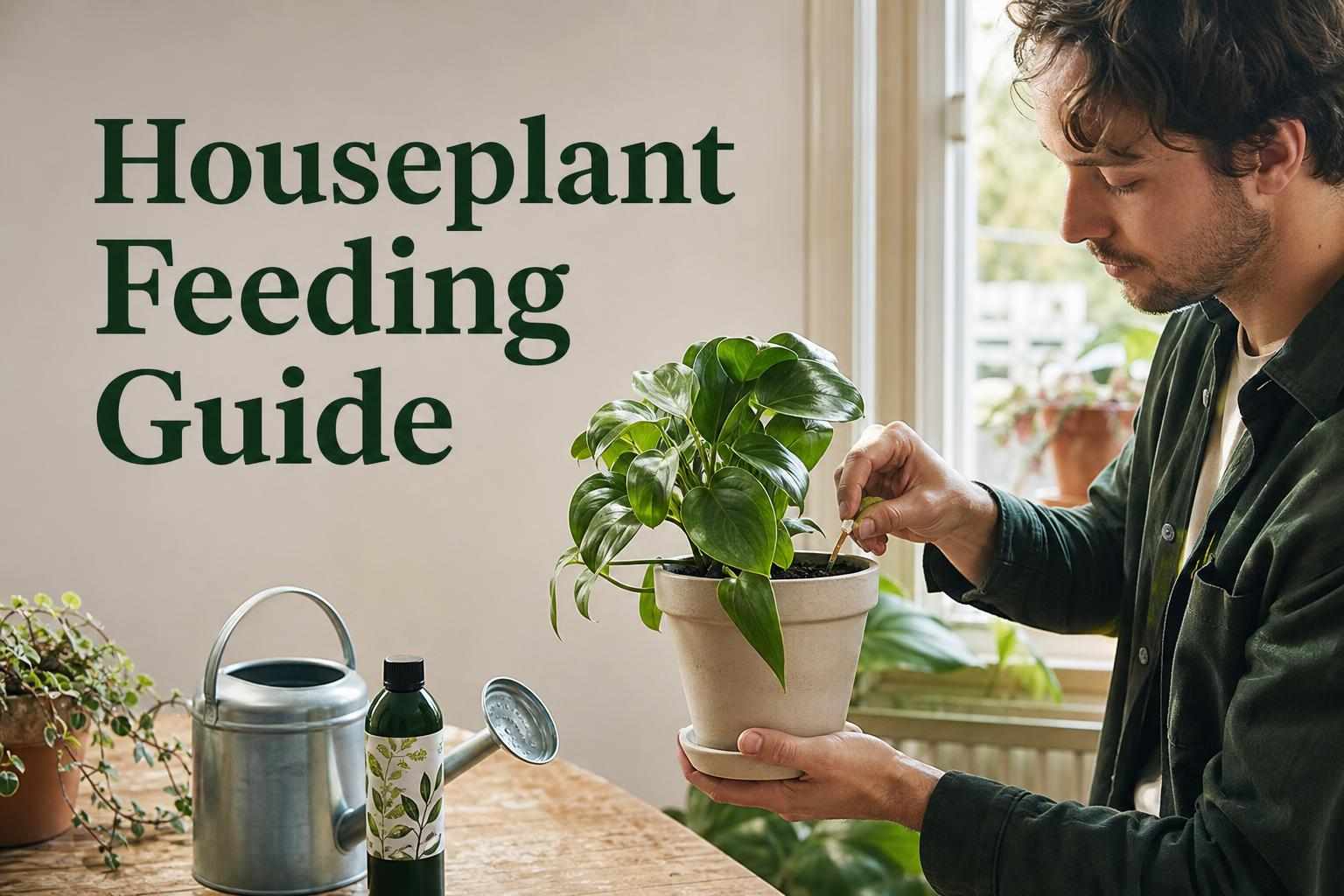
Houseplant Fertiliser Guide: How to Match Feeding to Light, Pot Size and Growth Rate
Feeding indoor plants is not about following a calendar blindly. The right houseplant fertiliser depends on how much light a plant receives, how quickly it is growing, and how limited its roots are by the pot. A plant in bright light with active new growth will usually use nutrients faster than a plant in a shaded corner. Likewise, a small pot can exhaust its compost more quickly than a larger one, even if both plants are the same species.
This guide explains how to match feeding to real growing conditions so you can avoid both underfeeding and excess fertiliser. The goal is simple: support healthy leaves, roots and growth without forcing weak plants to take on more than they can use.
Why houseplant fertiliser should match the plant, not the calendar
Indoor plants do not all grow at the same speed, and they do not all need feeding on the same schedule. Some are active for most of the year, while others slow down during short days, cool rooms or low light. A fixed monthly routine can be useful as a reminder, but it should never replace observation.
When you judge feeding by the plant’s actual condition, you get better results. Look for signs of active growth such as new leaves, fresh stems, branching, or a plant that dries out and drinks more quickly than usual. These are clues that the plant is using water and nutrients efficiently.
How light affects feeding needs
Bright light means faster growth and higher nutrient use
Plants in bright, indirect light usually photosynthesise more effectively and produce more growth. Because they are building leaves, stems and sometimes flowers at a faster pace, they can make better use of a balanced houseplant fertiliser.
- Feed more regularly during periods of active growth.
- Use a diluted feed if the plant is still small, newly repotted or root-bound.
- Watch for pale new leaves, slower extension growth or smaller-than-usual foliage.
Low light means reduced feeding demand
Plants in lower light grow more slowly, which means they need fewer nutrients. Feeding too often in these conditions can cause weak, stretched growth or a build-up of unused salts in the compost.
- Reduce feeding frequency in dim rooms or during dark winter months.
- Use a weaker dose if the plant is not producing new growth.
- Pause feeding if the plant is resting and moisture is staying in the pot for longer.
Seasonal changes matter indoors too
Even indoor plants respond to seasonal shifts. Winter light levels drop, central heating can alter humidity, and many plants naturally slow down. In spring and early summer, most houseplants become more receptive to feeding again.
A good rule is to increase feeding only when the plant itself starts growing faster, not simply because the month has changed.
Pot size and compost volume: why small containers need closer attention
Pot size has a major influence on how quickly nutrients are used up. A plant in a small pot has less compost available, which means less nutrient reserve and less buffer against watering fluctuations. Over time, roots can fill the container and reduce the amount of growing medium left to hold moisture and food.
Small pots and crowded roots
Small containers dry out quickly and can become depleted faster. If the plant is healthy and actively growing, it may need more frequent but lighter feeding. However, if roots are tightly packed, the plant may not be able to take up nutrients efficiently.
- Use a gentler dose rather than increasing strength.
- Consider repotting if roots are circling the pot or pushing up from the surface.
- Do not assume more fertiliser will solve stunted growth in a cramped pot.
Larger pots and slower nutrient turnover
Plants in larger pots often retain moisture and nutrients for longer. That can be useful, but it also means feeding should be more cautious. If a plant is not growing actively, the compost may remain rich enough for weeks or months.
Always check whether the potting mix is drying at a reasonable pace before adding more feed. If it stays wet for too long, fertilising can add stress rather than support.
Using growth rate to decide when to feed
Growth rate is one of the clearest signs that a plant is ready for fertiliser. Fast-growing plants use nutrients quickly, while slow growers or dormant plants need far less.
Signs of active growth
- New leaves appearing regularly
- Stems lengthening or branching
- Visible root activity at drainage holes
- More frequent watering needs
Signs to reduce or pause feeding
- No new growth for several weeks
- Very slow drying between waterings
- Yellowing caused by poor drainage rather than lack of feed
- Soft, weak or leggy growth in low light
If growth slows naturally in winter, feeding should slow too. If growth remains strong, you may continue with light, regular feeding, but only as long as the plant is clearly using it.
Choosing the right type of houseplant fertiliser
The best product depends on the plant, the pot and how often you water. A balanced liquid feed is often the easiest option for houseplants because it allows control over strength and timing. Slow-release products can also work well, but they need careful use in small or moisture-retentive pots.
Liquid fertiliser
- Easy to dilute for sensitive plants
- Useful when you want to adjust feeding to growth rate
- Good for plants that are watered regularly
Slow-release fertiliser
- Convenient for steady feeders
- Less flexible if the plant slows down
- Can be risky in cool, damp or low-light conditions
Organic and mineral options
Either organic or mineral houseplant fertiliser can work well if used correctly. What matters most is concentration, frequency and suitability for the plant’s conditions. A gentle feed applied at the right time is usually better than a stronger product used too often.
How to avoid common feeding mistakes
Overfeeding is one of the most common problems with indoor plants. Because houseplants live in containers, excess fertiliser does not wash away quickly unless the pot is flushed carefully. A build-up of salts can damage roots, scorch leaf tips and reduce the plant’s ability to take up water.
Common mistakes to avoid
- Feeding on a strict schedule without checking growth
- Using full-strength fertiliser on a stressed plant
- Adding feed to dry compost
- Continuing to feed during low light or dormancy
- Ignoring the effect of a very small pot
Better feeding habits
- Water first if the compost is dry, then feed at the recommended dilution
- Reduce feeding in winter unless the plant is clearly active
- Match the dose to the plant’s size and pot volume
- Repot when roots are full before increasing fertiliser strength
Practical feeding approach by plant condition
Use the following as a simple decision guide:
- Bright light + active growth + small pot: feed lightly and more regularly.
- Bright light + active growth + large pot: feed at moderate strength and observe closely.
- Low light + slow growth: feed sparingly or pause feeding.
- Recently repotted plant: wait before feeding if fresh compost already contains nutrients.
- Root-bound plant: repot first if possible, then resume a controlled feeding routine.
This approach works better than a fixed schedule because it follows the plant’s real needs. It also helps you avoid common problems such as weak growth, salt build-up and nutrient waste.
When to repot instead of feeding more
Sometimes a plant does not need more fertiliser; it needs more room. If the roots have filled the pot, the compost has broken down, or the plant dries out too quickly despite healthy watering, repotting may be the better solution.
Adding more houseplant fertiliser to a cramped root system can only do so much. Fresh compost, a slightly larger pot and a better root environment often create stronger long-term results than simply increasing feed.
Conclusion: feed to conditions, not to habit
The most effective houseplant care comes from reading the plant in front of you. Light levels, pot size and growth rate all shape how much fertiliser an indoor plant can use. When you adjust feeding to these conditions, you support stronger roots, healthier foliage and more reliable growth.
Use houseplant fertiliser as a tool, not a routine. Feed more when the plant is active and well lit, feed less when growth slows, and repot when the container is holding the plant back. That is the simplest way to keep indoor plants thriving for the long term.



Recent Comments