
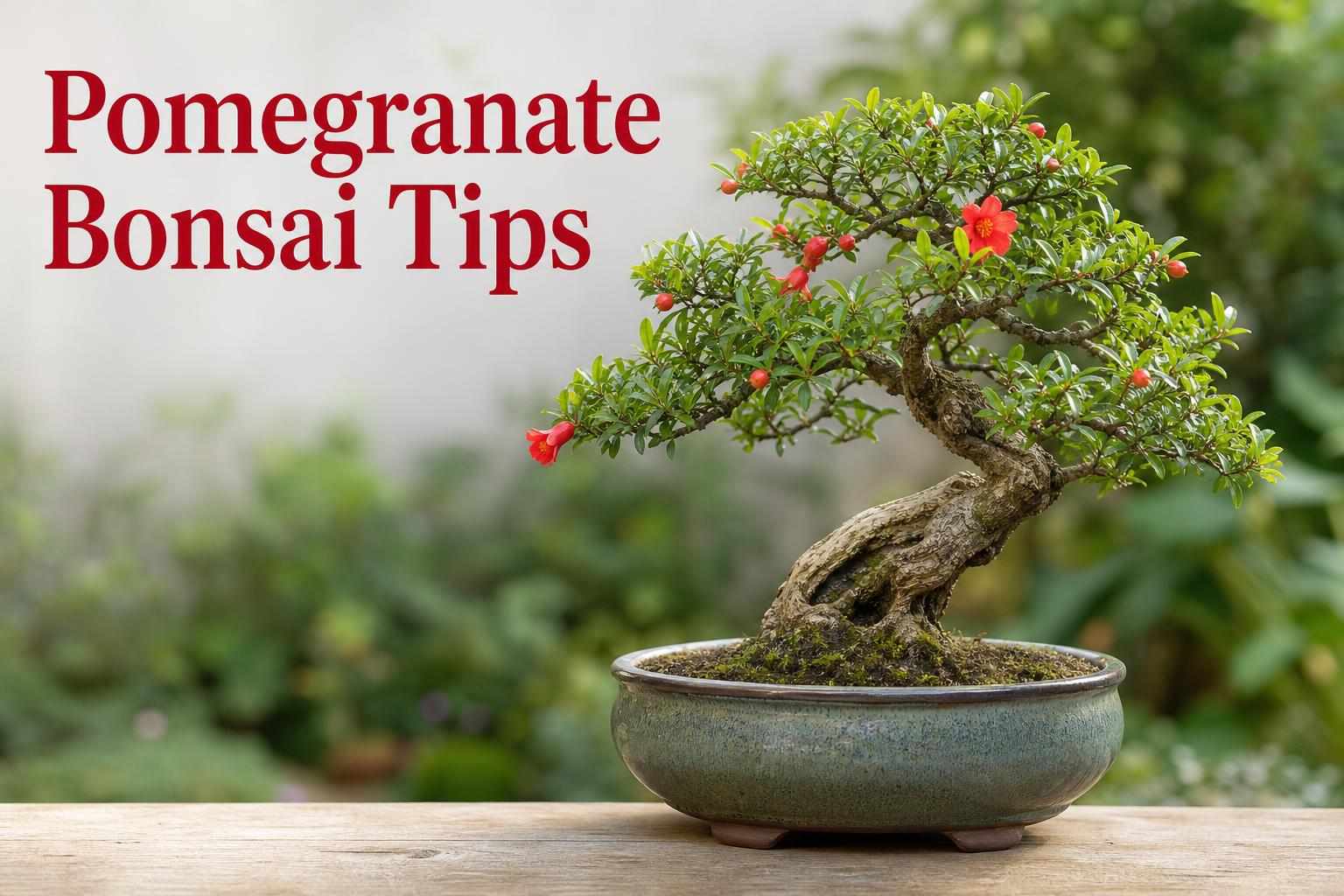
Pomegranate Tree Bonsai: Light, Watering, Pruning and Feeding Tips
Pomegranate tree bonsai are admired for their fine structure, small leaves, seasonal flowers and, in the right conditions, miniature fruits. They can be highly rewarding, but they also need consistent, well-balanced care to stay healthy and productive. The key is to support the tree’s natural growth rhythm rather than forcing it.
This guide focuses on the essentials: how much light your tree needs, how to water it correctly, when and how to prune, and how to feed it across the seasons. Whether your bonsai is kept indoors for part of the year or outdoors in a sheltered spot, these practical tips will help you maintain strong growth, good ramification and a pleasing shape.
Understanding pomegranate tree bonsai growth
The pomegranate is a deciduous species that responds well to bonsai training because it tolerates pruning and can produce attractive new growth after trimming. It is naturally a sun-loving plant, and its health depends heavily on strong light and a proper seasonal cycle.
Unlike many tropical bonsai, pomegranate bonsai need clear seasonal changes. They perform best when they can grow vigorously in spring and summer, then slow down in autumn before resting in winter. This cycle influences every aspect of care, from watering frequency to feeding and pruning timing.
Light requirements for healthy growth
Light is one of the most important factors in pomegranate tree bonsai care. Without enough sun, the tree may develop weak shoots, sparse foliage and poor flowering. In the long term, low light also reduces overall vigour.
Best position for maximum light
- Place the bonsai outdoors in full sun whenever possible.
- Choose a position with at least several hours of direct sunlight each day.
- In very hot climates, provide light afternoon shade to prevent leaf scorch.
- Rotate the pot regularly so all sides of the tree receive even exposure.
If you must keep the tree indoors temporarily, place it as close as possible to a very bright south- or west-facing window. However, indoor conditions are usually only a short-term solution. For long-term health, pomegranate bonsai generally do better outdoors in fresh air and strong light.
Signs that the tree is not getting enough light
- Long, weak shoots with large gaps between leaves
- Poor flowering or no flowers at all
- Yellowing lower leaves
- Reduced back-budding after pruning
If you notice these signs, move the tree to a brighter position gradually to avoid sudden stress.
Watering pomegranate tree bonsai correctly
Watering should be consistent but never excessive. Pomegranate bonsai prefer evenly moist soil during active growth, yet they dislike sitting in water. Overwatering can quickly lead to root problems, while underwatering may cause leaf drop, flower loss and weak development.
How to know when to water
Instead of watering on a fixed schedule, check the soil first. The top layer should begin to dry slightly before you water again. In warm weather, this may mean daily checking; in cooler periods, the interval may be longer.
- Water thoroughly when the surface begins to dry.
- Apply water until it runs freely from the drainage holes.
- Do not leave the pot standing in excess water.
- Adjust watering according to temperature, wind and pot size.
Common watering mistakes
- Too little water: causes drooping, dry leaves and flower buds dropping.
- Too much water: reduces oxygen at the roots and encourages rot.
- Irregular watering: can split developing fruit and stress the tree.
During flowering and fruiting, consistency becomes even more important. Sudden changes in moisture levels can affect the quality of flowers and any fruit the tree is carrying.
Seasonal watering adjustments
- Spring: increase watering as new growth begins.
- Summer: monitor closely, as trees may dry quickly in heat and wind.
- Autumn: reduce slightly as growth slows.
- Winter: water sparingly, but never allow the root ball to dry out completely.
Pruning for shape, ramification and fruiting
Pruning is essential for keeping a pomegranate tree bonsai compact, attractive and healthy. It also helps create finer branching and encourages flowering on well-placed new growth. The aim is to combine structure with productivity.
Structural pruning
Structural pruning is usually carried out when the tree is dormant or just before strong spring growth begins. At this stage, you can remove unwanted branches, crossing shoots and thick growth that disrupts the silhouette.
- Keep the main branch structure clear and balanced.
- Remove branches growing directly inward or downward if they do not fit the design.
- Avoid removing too much in one session, especially on younger trees.
Maintenance pruning
During the growing season, pinch or trim back vigorous new shoots to maintain shape. This prevents the tree from becoming leggy and encourages denser growth closer to the trunk and branch lines.
- Trim back strong shoots after they have extended several leaves.
- Leave enough foliage to keep the tree healthy.
- Use clean, sharp tools to reduce damage.
Flower and fruit management
Pomegranate bonsai can flower readily, and some trees will set small fruits. If your goal is a balanced display, do not let the tree carry too many fruits at once. Excess fruiting can drain energy, reduce ramification and weaken the tree over time.
- Thin fruit if the tree is small or recently repotted.
- Prioritise the tree’s long-term health over heavy fruit loads.
- Allow the tree to recover if flowering has been especially abundant.
Feeding pomegranate tree bonsai through the year
Feeding supports healthy growth, flowering and root development. Pomegranate bonsai benefit from regular nutrition during the active season, but overfeeding can produce coarse growth and reduce refinement. Balanced feeding is usually best.
If you want to learn more about general plant nutrition principles, you may also find this useful: Top fertilizer for plant nutrition – shop on line now.
When to feed
- Spring: start feeding as soon as strong new growth appears.
- Summer: continue feeding regularly to support growth and flowering.
- Autumn: reduce the frequency as growth slows.
- Winter: pause feeding while the tree is dormant.
What type of fertiliser to use
Use a balanced fertiliser during the main growing season. A formula that supports overall health is usually preferable to one that is too high in nitrogen, which can cause lush but coarse growth. As flowering begins, a steady feeding programme helps the tree maintain energy without pushing excessive leaf growth.
- Choose a balanced, bonsai-suitable fertiliser.
- Apply according to the product instructions.
- Reduce strength rather than increasing frequency if growth becomes too coarse.
For pomegranate bonsai, steady moderate feeding is often better than heavy feeding bursts. If the tree is weak, recently repotted or recovering from pruning, feed more cautiously until it regains vigour.
Repotting and soil considerations
Although this guide focuses on light, watering, pruning and feeding, soil and repotting also play a major role in overall health. A pomegranate tree bonsai needs a free-draining mix that supports strong roots while preventing waterlogging.
Good soil traits
- Excellent drainage
- Enough moisture retention to prevent rapid drying
- Good aeration for healthy roots
Repotting is usually done every one to three years depending on the age, vigour and root development of the tree. Younger trees may need it more often than older, more established specimens. Repot in the appropriate season for your climate, and avoid heavy pruning immediately after major root work.
Seasonal care calendar
Spring
- Move the tree into full sun gradually.
- Increase watering as new leaves emerge.
- Begin feeding once active growth starts.
- Carry out structural or corrective pruning if needed.
Summer
- Maintain strong light and even watering.
- Watch carefully for rapid drying in hot weather.
- Trim vigorous shoots to maintain shape.
- Support flowering and fruit development with steady feeding.
Autumn
- Reduce feeding as growth slows.
- Continue watering carefully, but less often if conditions are cooler.
- Allow the tree to harden off before winter.
Winter
- Keep the tree in a sheltered, bright position.
- Water only when needed, but do not let it dry out completely.
- Stop feeding during dormancy.
- Plan major pruning and repotting for the next active period.
How to keep your pomegranate bonsai productive and balanced
The healthiest pomegranate bonsai are those that grow with purpose: enough light, steady moisture, careful pruning and moderate feeding. When these elements are kept in balance, the tree rewards you with denser branching, better flowering and stronger overall form.
Patience is important. A bonsai that is pushed too hard with heavy feeding or repeated drastic pruning may look busy for a while, but it will usually lose refinement and energy. A measured approach gives better long-term results and helps the tree remain compact, attractive and productive year after year.
Quick care checklist
- Give the tree as much sun as possible.
- Water thoroughly, but only when the soil begins to dry.
- Prune regularly to maintain shape and encourage branching.
- Feed moderately during active growth.
- Reduce feeding and watering as the tree enters dormancy.
- Protect the tree from extremes, especially in containers.
With the right routine, pomegranate tree bonsai can become one of the most rewarding species to grow. Focus on light, consistent watering, sensible pruning and balanced feeding, and your tree will be far more likely to stay healthy, attractive and productive throughout the year.


Recent Comments