
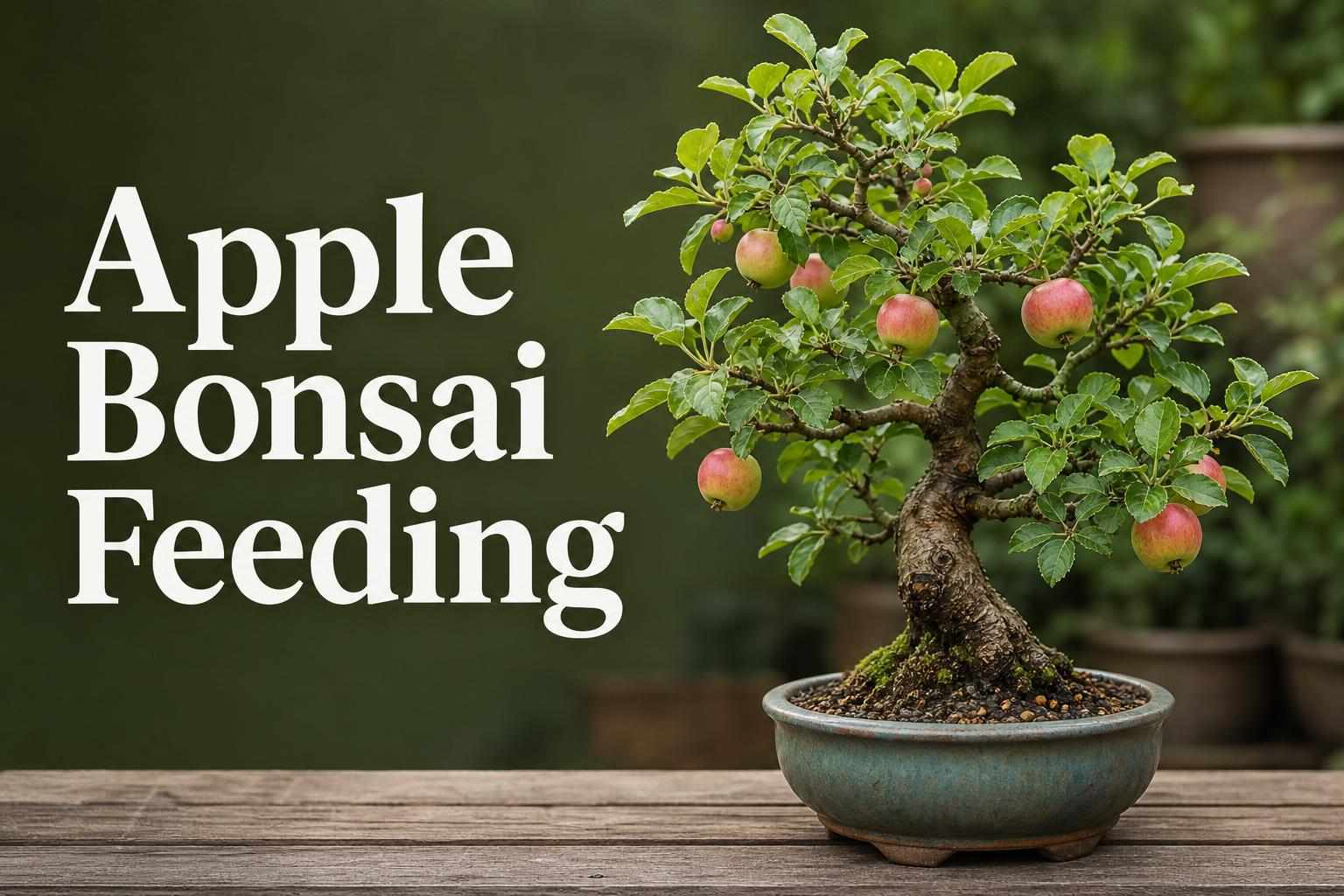
Apple Bonsai Tree Feeding Guide: The Best Soil Mix, Nutrients and Feeding Schedule for Healthy Growth
Good apple bonsai tree care starts below the surface. If the soil is too dense, too wet or too rich, roots struggle and the tree often responds with weak growth, leaf drop or soft, oversized shoots. If feeding is too light, the tree becomes hungry and loses vigour at the very moment it needs energy for leaves, flowers and fruit.
The aim is not to push an apple bonsai tree to grow quickly. It is to support steady growth, strong roots and balanced top growth while avoiding the common mistake of overfeeding. This guide explains how to choose the best soil mix, which nutrients matter most, and how to build a reliable feeding routine through the growing season.
What Apple Bonsai Trees Need from Soil and Feeding
Apple bonsai trees are fruiting trees in very small containers, so they depend entirely on the grower for water, oxygen, nutrients and root space. A good feeding plan only works if the soil can hold enough moisture while still draining freely.
The ideal setup combines:
- excellent drainage to protect fine roots
- enough water retention to prevent rapid drying
- air pockets for healthy root respiration
- regular but modest feeding rather than strong, irregular doses
Because apple bonsai are often grown for both structure and flowers or fruit, they need more consistency than many ornamental bonsai. At the same time, they do not tolerate heavy fertiliser use well. A balanced approach is best.
The Best Soil Mix for Apple Bonsai Tree Care
A suitable soil mix should be free-draining, open in texture and stable enough to avoid compacting over time. For apple bonsai, a mineral-based mix is usually the safest choice, with optional organic material added in moderation if the growing conditions are dry or hot.
Recommended Soil Qualities
- Fast drainage: prevents waterlogging and root rot
- Moderate water retention: keeps the tree hydrated between waterings
- Good aeration: supports fine feeder roots
- Low compaction: maintains structure over the season
Practical Soil Mix Approach
A well-balanced bonsai mix for apple trees often includes a blend of fine inorganic components such as akadama, pumice and lava rock, with the exact proportions adjusted to your climate and watering habits. In warmer or windier conditions, a mix that retains a little more water can be helpful. In cooler or wetter conditions, increase the free-draining components.
If your tree is growing in a very small pot, avoid heavy garden soil or compost-rich mixes. These tend to stay wet for too long and reduce oxygen at the roots.
When to Improve Soil Structure
If the tree dries out too quickly, collapses after watering or shows poor root activity, the issue may be the soil structure rather than the feeding routine. In that case, repotting into a more balanced mix is often more effective than increasing fertiliser.
For deeper seasonal planning, you may also find this useful: Bonsai Fertilising Calendar: A Month-by-Month Feeding Plan for Year-Round Care.
Essential Nutrients for Healthy Apple Bonsai Growth
Apple bonsai trees need the standard plant nutrients, but the balance matters more than the absolute quantity. Overly nitrogen-heavy feeding can produce soft, leafy growth at the expense of ramification, flowering and fruit quality.
Key Nutrients and Their Roles
- Nitrogen (N): supports leaf and shoot growth, but should be used carefully to avoid overly lush growth
- Phosphorus (P): supports roots, flowering and energy transfer
- Potassium (K): helps with overall vigour, stress tolerance and fruit development
- Micronutrients: such as iron, magnesium, manganese and boron support healthy colour, chlorophyll and reproductive growth
For apple bonsai, a balanced fertiliser is usually preferable for regular feeding. Too much nitrogen can make the tree grow too vigorously, creating coarse internodes and reducing the refined bonsai appearance. Later in the season, a formula with slightly lower nitrogen and stronger potassium support can be useful if the goal includes fruiting or hardening growth.
Organic vs Liquid Feeding
Both organic and liquid fertilisers can work well for apple bonsai tree care. The best choice depends on your climate, watering routine and how much control you want over feeding strength.
- Organic fertiliser: tends to release nutrients more slowly and steadily, which can reduce the risk of overfeeding
- Liquid fertiliser: gives faster results and allows precise control, but must be diluted correctly and used consistently
Many growers use a combination of both: a gentle organic base feeding during the season, plus occasional liquid feeds when the tree is actively growing and responding well.
How Often to Feed an Apple Bonsai Tree
The correct feeding frequency depends on temperature, growth rate, soil type and whether the tree is recovering from repotting. As a general rule, feed more lightly but more regularly during active growth, and reduce feeding when growth slows.
Spring Feeding
Spring is the start of active growth, and this is when apple bonsai trees begin to use nutrients more quickly. Start feeding only once the tree is showing clear new growth and roots are active after winter. Begin with a modest strength rather than a full dose.
Summer Feeding
During summer, trees in strong light may use nutrients quickly, especially if they are carrying developing fruit. Continue feeding regularly, but do not assume that more fertiliser means better growth. Watch the tree’s response closely. If shoots become soft and overly long, reduce the strength or frequency.
Autumn Feeding
As growth slows, reduce feeding gradually. A lighter routine in early autumn can help the tree store energy without encouraging tender late growth. Stop or reduce feeding further as temperatures fall and the tree moves towards dormancy.
Winter Feeding
Most apple bonsai trees need little or no feeding in winter if they are dormant. Feeding a dormant tree is usually unnecessary and can create imbalance in the soil. Resume only when growth restarts in spring.
Simple Feeding Schedule for Apple Bonsai
This is a practical starting point, not a fixed rule. Adjust it according to tree vigour, pot size, weather and the behaviour of your soil.
Suggested Schedule
- Early spring: begin with a light, balanced feed once new growth is active
- Late spring to mid-summer: feed regularly at a moderate strength
- Late summer: continue feeding if the tree remains active, but reduce strength if growth becomes too coarse
- Early autumn: taper feeding down
- Winter: pause feeding while dormant
If you prefer a broader approach to matching plant nutrition to conditions, this guide can help: Houseplant Fertiliser Guide: How to Match Feeding to Light, Pot Size and Growth Rate.
How to Avoid Overfeeding
Overfeeding is one of the most common problems in apple bonsai tree care. The symptoms may not appear immediately, but they often include coarse shoots, weak root performance, excess leaf size and reduced balance in the canopy.
Warning Signs of Too Much Fertiliser
- very long internodes
- soft, sappy shoots
- dark, overly lush foliage
- salt build-up on the soil surface
- reduced flowering or poor fruit set
How to Keep Feeding Safe
- start with lower concentrations
- feed more often rather than in very strong doses
- flush the pot occasionally with clean water if salt build-up appears
- reduce feeding after repotting until roots recover
- observe the tree rather than following a rigid timetable alone
If you are unsure, it is usually better to underfeed slightly than to push the tree too hard. Bonsai trees respond better to consistency than force.
Feeding After Repotting or Pruning
After repotting, roots need time to recover. Even if the top growth looks healthy, the tree may not be able to absorb fertiliser efficiently straight away. Hold back on strong feeding until you see active recovery.
Likewise, after major pruning or heavy work, give the tree a short period to settle before resuming the normal routine. Gentle feeding is fine once new growth starts again, but strong fertiliser too early can increase stress.
Feeding for Flowering and Fruit Development
If your goal is a tree that flowers and fruits well, the feeding strategy should support energy storage without forcing excessive leafy growth. A balanced programme is usually more effective than a high-nitrogen regime.
- keep growth steady rather than aggressive
- avoid overfeeding in spring if shoots are already strong
- maintain good light levels to support flowering
- use a moderate feeding plan rather than sudden boosts
For more on the wider care balance needed for fruiting bonsai, see Fruit Bonsai Trees in Pots: How to Balance Water, Light and Feeding for Reliable Yields.
Extra Soil and Root Health Support
A healthy root zone is the foundation of stable feeding. If your tree is in good soil but still struggles with weak roots or poor uptake, soil biology may be part of the answer.
Some growers use gentle soil conditioners or bio-activators to support root vitality and improve the growing environment. These are not a substitute for proper drainage or correct feeding, but they can complement a well-designed routine. For more information, see Bio-activators for Bonsai Soil Vitality: How They Support Root Health and Growth.
Common Mistakes in Apple Bonsai Feeding
Even experienced growers sometimes make the same mistakes repeatedly. Avoiding these can make a noticeable difference to the tree’s structure and long-term health.
- Feeding too soon after repotting: roots may not be ready to absorb nutrients well
- Using too much nitrogen: encourages coarse growth instead of refined structure
- Letting the soil dry out completely between feeds: reduces uptake and stresses roots
- Applying strong fertiliser in winter: wastes nutrients and may disturb dormancy
- Ignoring soil quality: feeding cannot compensate for poor drainage or compacted mix
Seasonal Mindset: Steady Growth Over Fast Growth
The best apple bonsai tree care routine is one that supports a slow, even rhythm. Healthy bonsai development comes from stable roots, good light, appropriate water and a measured feeding plan. Quick fixes and heavy fertiliser doses usually create more problems than they solve.
If you want a compact, healthy tree, aim for:
- a free-draining soil mix
- modest but regular feeding during active growth
- less feeding when growth slows
- close observation of the tree’s response
- patience over force
For a broader guide to fertiliser choice across bonsai species, this article may also be useful: Best Fertiliser for Bonsai Trees: How to Feed for Compact Growth.
Conclusion
Apple bonsai tree care is most successful when soil, nutrients and feeding rhythm all work together. Choose a free-draining, airy mix, feed with a balanced approach, and avoid the temptation to overcorrect with strong fertiliser. With steady, seasonally adjusted feeding, your apple bonsai can develop healthy roots, controlled growth and the strength needed for flowers and fruit over time.

Recent Comments