

How to Grow Bonsai Apple Trees at Home: Complete Care Guide
Growing bonsai apple trees at home is a rewarding way to enjoy the beauty of fruit trees in a compact form. With the right variety, thoughtful positioning, and consistent care, you can cultivate a miniature apple tree that offers delicate spring blossom, attractive foliage, and, in some cases, small ornamental fruit.
This complete guide covers step-by-step cultivation, positioning, watering, feeding, pruning, repotting, and seasonal maintenance for compact apple bonsai indoors and outdoors. Whether you are starting from a young sapling or refining an established specimen, the principles below will help you build a healthy and well-balanced tree.
Understanding bonsai apple trees
Apple trees belong to the genus Malus, and several species and cultivars can be trained as bonsai. The best results usually come from small-leaved, vigorous, and adaptable varieties that respond well to pruning. Apple bonsai are valued for their seasonal interest: spring flowers, summer growth, autumn fruit, and winter structure.
Unlike purely decorative bonsai, apple bonsai need a balance between aesthetics and plant health. If the tree is overworked through excessive pruning or kept in poor light, it may weaken quickly. A successful approach combines careful styling with strong horticultural basics.
Choosing the right apple variety
Not every apple cultivar is ideal for bonsai culture. Choose a tree that naturally has smaller leaves and produces manageable growth. Crab apples are especially popular because they are hardy, adaptable, and often bear smaller fruit.
Good traits to look for
- Small or naturally proportioned leaves
- Strong back-budding after pruning
- Good tolerance of container growth
- Reliable flowering and fruiting
- Resistance to common apple diseases where possible
Starting material options
- Nursery saplings: the easiest option for beginners
- Pre-bonsai stock: useful if you want a head start on trunk thickness
- Seedlings: inexpensive but slow and unpredictable
- Collected material: only suitable if you have the experience and permission required
Ideal positioning indoors and outdoors
Light is one of the most important factors for bonsai apple trees. Apple trees are outdoor plants by nature and perform best in full sun. Indoors, they can survive for limited periods only if placed in the brightest possible position.
Outdoor placement
- Place the tree in full sun for most of the day.
- Protect it from harsh wind that may dry the pot too quickly.
- Ensure good air circulation to reduce fungal risk.
- During extreme heat, provide light afternoon shade if the foliage shows stress.
Indoor placement
Indoors, position the tree right beside a south-facing or very bright window if possible. Even then, indoor conditions are often less than ideal for apple bonsai over the long term. Use indoor placement as a temporary solution, such as during a display period or severe weather.
If you are also growing other houseplants, it may help to review broader indoor care habits; this can be a useful companion read on Indoor Plants: simple tricks for stunning results.
Potting and soil requirements
A well-draining bonsai mix is essential. Apple roots dislike sitting in water, but they also need steady moisture and oxygen. A balanced bonsai substrate should hold enough water for even growth while draining freely.
Recommended soil qualities
- Fast drainage
- Good aeration
- Moderate water retention
- Stable structure over time
Typical bonsai soil components
- Akadama or a similar water-retentive granular soil
- Pumice for drainage and root health
- Lava rock or coarse grit for structure
Use a pot with generous drainage holes. Shallow bonsai containers are suitable once the root system is established, but young trees may benefit from deeper training pots while they are still developing trunk and branch structure.
Watering bonsai apple trees correctly
Watering is one of the most common causes of success or failure with bonsai. Apple bonsai like consistent moisture, but they must never remain soggy for long periods. The aim is to water thoroughly, then allow the upper layer of soil to begin drying before watering again.
How to water
- Water until it runs freely from the drainage holes.
- Ensure the entire root ball is moistened, not just the surface.
- Check the tree daily in warm or windy weather.
- Reduce frequency in cool, dull, or dormant periods.
Useful watering tips
Use your finger, a moisture metre, or the weight of the pot to judge when watering is needed. Newly repotted trees and trees in small pots dry out more quickly. In summer, some trees may need water twice a day, while in winter the schedule may be much lighter.
Feeding for healthy growth and fruiting
Because bonsai live in restricted soil volumes, they depend on regular feeding. Apple bonsai need adequate nutrition to support leaf growth, flower formation, and fruit development. Feed during the growing season, but avoid overfeeding, which can encourage coarse growth.
For a broader look at plant nutrition products, you may also find this resource helpful: Top fertilizer for plant nutrition – shop on line now.
Feeding schedule
- Spring to mid-summer: feed regularly as growth begins
- Late summer to early autumn: continue feeding more lightly if the tree is healthy
- Winter: stop feeding while the tree is dormant
Fertiliser choice
Use a balanced fertiliser for general development, then shift to a formulation that supports flowering and fruiting if your tree is mature enough. Organic pellets or liquid feeds can both work well, provided they are used consistently and according to the tree’s needs.
Pruning and shaping
Pruning keeps the tree compact and helps develop a convincing miniature form. Apple bonsai can be styled in many ways, but the goal is always to preserve balance between trunk, branches, foliage, and roots.
Structural pruning
Carry out major branch selection when the tree is dormant or just before active growth begins. Remove branches that cross, grow straight inward, or disrupt the design. Keep the branch framework open enough for light to reach the inner canopy.
Maintenance pruning
- Trim long shoots during the growing season.
- Reduce new growth to maintain shape.
- Leave enough foliage to support energy production.
- Pinch or cut back tips as needed to refine ramification.
Flower and fruit management
If your tree flowers, you may choose to thin blossoms or young fruit to prevent exhaustion. A small number of fruits can be attractive, but too many may weaken a miniature tree. For younger bonsai, it is often better to prioritise structure and vigour over fruiting.
Wiring and branch training
Wiring helps you create movement and direction in the branches. Apple branches can be somewhat flexible when young, but they should be checked regularly because growth can thicken quickly and mark the bark.
Wiring guidelines
- Use appropriate wire thickness for the branch size.
- Wrap carefully to avoid damaging the bark.
- Check frequently during active growth.
- Remove wire before it begins to cut in.
If you are interested in broader conifer styling principles as well, this guide may be useful: Pine bonsai: a complete growing guide.
Repotting and root care
Repotting keeps the root system healthy and prevents the tree from becoming root-bound. Apple bonsai usually benefit from repotting every two to three years when young, and slightly less often when mature.
When to repot
- Late winter or early spring, just before bud break
- When water starts draining too quickly through compacted roots
- When root growth becomes crowded and reduces vigour
Repotting steps
- Remove the tree carefully from its pot.
- Comb out the roots gently with a chopstick or root rake.
- Trim away a sensible amount of circling or dead roots.
- Prepare fresh bonsai soil in the container.
- Secure the tree firmly to prevent movement.
- Water thoroughly after repotting.
After repotting, keep the tree protected from intense sun and strong wind for a short recovery period.
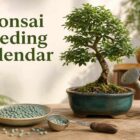
Seasonal maintenance calendar
Apple bonsai respond best when their care is matched to the season. Their needs change throughout the year, especially if they are kept outdoors.
Spring
- Watch for bud swelling and new growth.
- Repot if needed before active growth is fully underway.
- Begin feeding once the tree is actively growing.
- Inspect for pests and early signs of disease.
Summer
- Water more frequently in warm weather.
- Trim vigorous shoots to preserve shape.
- Provide adequate light without allowing the pot to dry out too fast.
- Monitor fruit load if the tree has set fruit.
Autumn
- Reduce feeding as growth slows.
- Enjoy any autumn fruit display.
- Keep watering steady until temperatures fall.
- Prepare the tree for dormancy outdoors.
Winter
- Allow outdoor trees to experience their natural dormant period.
- Protect the roots from severe frost by sheltering the pot.
- Water sparingly, but do not let the root ball dry out completely.
- Avoid major pruning until late winter or early spring.
Common pests and diseases
Apple trees can be affected by pests and fungal issues, especially if airflow is poor or the tree is stressed. Good culture is the best prevention: strong light, sensible watering, clean tools, and regular inspection.
Watch out for
- Aphids
- Spider mites
- Scale insects
- Powdery mildew
- Apple scab
If symptoms appear, isolate the tree where possible and treat early. Remove badly affected foliage, improve airflow, and correct any watering or positioning problems.
Indoor versus outdoor care: which is better?
For long-term health, outdoor cultivation is usually best for apple bonsai. Natural light, seasonal changes, and fresh air all support stronger growth and better flowering. Indoor growing can work temporarily, but it requires the brightest possible location and careful attention to moisture and airflow.
A simple rule is this: if weather conditions allow, keep the tree outdoors for most of the year and bring it in only when absolutely necessary for protection or display.
Final tips for success
- Choose a hardy apple variety suited to container growing.
- Prioritise full sun and excellent drainage.
- Water thoroughly, then let the soil begin to dry slightly.
- Feed regularly during active growth.
- Prune and wire with restraint to preserve vigour.
- Respect the seasonal rhythm of the tree.
With patience and consistent care, bonsai apple trees can become beautiful living specimens that bring blossom, texture, and occasional fruit to your home or garden. Their charm lies in the way they combine ornamental elegance with the natural cycle of a real fruit tree.


Recent Comments